
Every year businesses spend thousands of dollars on marketing campaigns that fail to produce lasting results. Often the problem isn’t the marketing itself—it’s the lack of a strong brand behind it.
Marketing gets people to notice you. Branding gives them a reason to remember you. Over the years we have seen the terms marketing and branding used interchangeably by small and large business alike. While closely related the two disciplines serve very different purposes.
Here we will dive into the differences, why they both matter to your business, and why one without the other will ultimately fall flat in the current short attention climate.
What is Branding?
Simply put branding is the perception that people have of your business. While a logo and tagline are key elements to molding that perception they are only two small pieces of the equation. In the larger picture branding includes things like:
- Mission
- Values
- Personality
- Positioning (more on this later)
- Voice
- Visual Identity (this is where your logo comes in)
- Customer experience
Positioning deserves special attention because it determines where your business fits within the market and why customers should choose you over competitors. A clear position guides everything from messaging and pricing to marketing campaigns and customer experience.
These pieces get mashed together along with many other moving parts to make up what you can accurately call your “BRAND.”
HubSpot defines branding as “the identity of a company. And the image it wants to portray to its audience.” One example of this would be the Nike swoosh. Many think that the iconic brand mark IS the branding of Nike. Instead, the mark only represents what Nike’s brand really is which can more accurately be described as empowerment, achievement, and athletic performance.
Nike didn’t become one of the most recognizable brands in the world because of its logo. The swoosh became powerful because it consistently represented a larger idea: achievement, determination, and athletic performance.
Branding establishes who you are and what people should expect from your business. Once that foundation is in place, marketing becomes the tool used to communicate that message to the world.
What is Marketing?
Marketing is the tactical application of your branding assets with the intent to garner attention from your target audience, typically in line with promoting your products or services. These efforts generate awareness, leads, sales, or foot traffic for your business through targeted means.
If branding defines who you are, marketing is how you communicate that identity to potential customers. Marketing creates opportunities for people to discover your business, learn about your products, and ultimately take action.
Some elements that are involved in marketing efforts might look like this:
- Social Media
- SEO & GEO (Generative Engine Optimization)
- PPC Ads (pay per click, think Google ads)
- Email Campaigns
- Trade Shows and Events
- Content Marketing (YouTube and TicToc are good examples)
- Video Marketing (also YouTube but also television and others)
- Billboards and Signage
A Facebook ad is marketing. The reason someone clicks on the ad and trusts the company behind the ad is branding.
“Marketing refers to any actions a company takes to attract an audience to the company’s product or services through high-quality messaging. Marketing aims to deliver standalone value for prospects and consumers through content, with the long-term goal of demonstrating product value, strengthening brand loyalty, and ultimately increasing sales.”
HubSpot
How to Understand the Difference.
BRANDING
- Defines who you are
- Creates Perception
- Builds Trust
- Long-Term Strategy
- Why people choose you
MARKETING
- Promotes who you are
- Creates awareness
- Generates leads
- Short and medium-term tactics
- How people discover you
Common Branding vs. Marketing Myths.
Myth #1
REALITY
Myth #2
REALITY
Myth #3
REALITY
Why Branding Comes First.
We’ve all seen companies with wildly changing styles in their ads, images, presence, and even extremely disjointed websites where nothing seems to come from the same company. This is what happens when you put marketing before branding.
When business put marketing first their messaging becomes inconsistent, marketing feels disconnected, they end up competing on price alone, and customers struggle to remember them. A strong brand provides direction, consistency, differentiation, and trust.
According to LucidPress’s study on brand consistency 32% of respondents stated increases to brand revenue of 20% or more and 35% reported an increase of 10-20%. Furthermore, 21% said it increased revenue by 5-10%.
These gains aren’t the result of a logo redesign alone. They occur when customers repeatedly encounter the same message, voice, visual identity, and customer experience over time. Consistency builds familiarity, and familiarity builds trust.
Why Marketing Still Matters.
A great brand that nobody sees is still invisible. The foundation of a great brand amplified by a solid marketing strategy. Marketing creates visibility, generates opportunities, builds traffic, and drives conversions.
“Branding is what people say about you when you’re not in the room. Marketing is how you start the conversation.”
Paraphrased from branding principles often attributed to marketers such as Seth Godin.
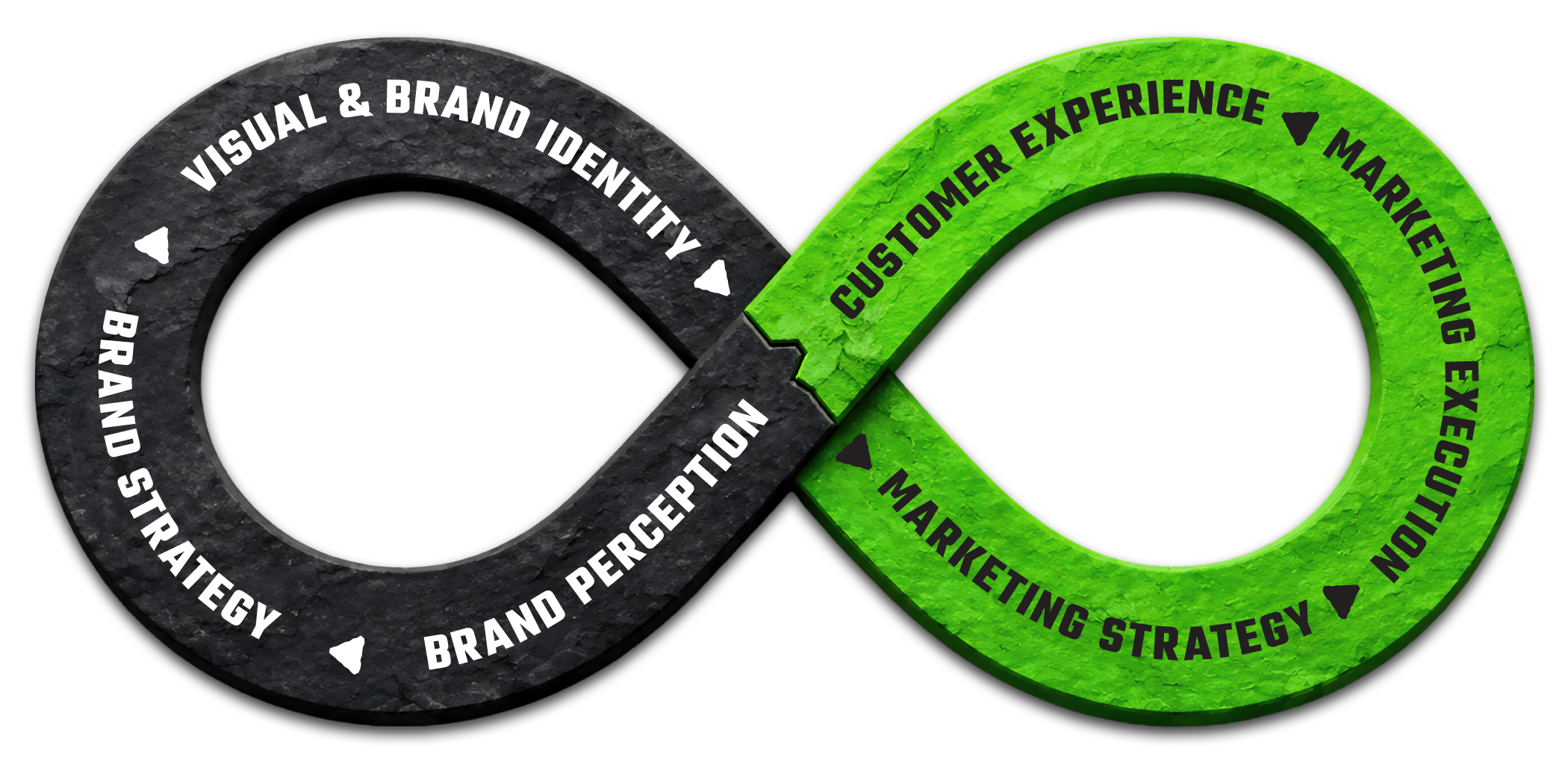
The Relationship Between Branding and Marketing
Is Your Business Facing a Marketing Problem or a Branding Problem?
One of the biggest mistakes businesses make is trying to solve every growth challenge with more marketing.
When leads slow down, the instinct is often to run more ads, post more content, or increase marketing spend. While marketing can certainly help generate visibility, it cannot fix a weak brand foundation.
Before investing more into marketing, it’s important to identify whether you’re dealing with a marketing problem, a branding problem, or a combination of both.
Signs You Have a Marketing Problem
A marketing problem typically occurs when your business has a solid reputation, clear positioning, and a strong customer experience, but not enough people know about it.
- Low Website Traffic
Your website converts visitors into customers, but not enough people are finding it. - Poor Search Visibility
Potential customers are searching for services you offer, but your business isn’t appearing in search results. - Low Lead Volume
You have a proven service or product, but inquiries have slowed because your audience isn’t being reached consistently. - Weak Ad Performance
Your advertising campaigns aren’t generating enough clicks, impressions, or conversions to support growth. - Limited Brand Awareness
People who do business with you love your company, but your market simply doesn’t know you exist.
A marketing problem typically occurs when your business has a solid reputation, clear positioning, and a strong customer experience, but not enough people know about it.
Signs You Have a Branding Problem
A branding problem occurs when people see your business but don’t clearly understand, remember, or trust it.
- Customers Confuse You with Competitors
Your business looks and sounds similar to everyone else in your industry. - Inconsistent Messaging
Your website, social media, sales materials, and customer communications all tell slightly different stories. - You’re Constantly Competing on Price
Customers don’t see a meaningful difference between your business and the alternatives available to them. - Low Recognition and Recall
People may have heard of your business, but they don’t remember it when it’s time to make a purchasing decision. - Difficulty Explaining What Makes You Different
If your answer to “Why should someone choose you?” sounds like every competitor’s answer, your positioning may need work. - Marketing Feels Like Guesswork
Every new campaign requires starting from scratch because there is no clear brand strategy guiding decisions.
In these situations, investing more in marketing may simply amplify confusion. Before increasing visibility, it’s often necessary to strengthen the foundation through brand strategy, positioning, messaging, and visual identity.
In reality, most business have a little of both. Marketing and brand are not exclusive competing priorities. They are partners.
The most successful businesses invest in both. They build a brand that customers recognize and trust, then use marketing to put that brand in front of the right audience consistently.
Why Trust Matters More Than Ever.
Edelman stated, “81% of consumers say trust is a deciding factor or deal breaker when considering a purchase” while more than 50% of consumers buy from brands that align with their values and beliefs and 57% continue buying from a trusted brand even when cheaper alternatives exist.
Trust has become one of the most valuable assets a business can build in an era where consumers have more choices than ever before. Marketing can get traffic to your site or in your business’ door, but branding determines whether they believe and trust what they find.
Key Takeaways.
- Branding and marketing are not the same thing.
- Branding defines who you are.
- Marketing communicates who you are.
- Branding builds trust.
- Marketing builds awareness.
- Businesses that align both create stronger, more sustainable growth.
A great marketing strategy can generate attention. A strong brand turns that attention into trust, loyalty, and long-term growth. If your business is struggling to stand out, the solution may not be more marketing… it may be a stronger brand foundation.
References.
Edelman. (2019). Edelman Trust Barometer special report: In brands we trust. Retrieved from https://www.edelman.com/research/trust-barometer-special-report-in-brands-we-trust
Edelman. (2022). Edelman Trust Barometer 2022. Retrieved from https://www.edelman.com/be/research/Edelman-trust-barometer-2022
Edelman. (2025). Special report: Brands. Retrieved from https://www.edelman.com/trust/2025/trust-barometer/special-report-brands
HubSpot. (2025). What is branding? Understanding its importance. Retrieved from https://blog.hubspot.com/marketing/branding
Lucidpress (Marq). (2019). The state of brand consistency. Retrieved from https://pub.lucidpress.com/5026f8f1-6004-496e-b308-71662d214bb3/document.pdf
Marq. (2026). Brand consistency: The competitive advantage. Retrieved from https://www.marq.com/blog/brand-consistency-competitive-advantage/